A brand is easiest to judge by what it will not do. This page states both halves: the object we make, and the lines we hold.
The Word
JOMOPERA joins two words. JOMO comes from the Tibetan name of a Himalayan peak. OPERA means the stage. A summit and a stage, in one name. The combination sets the standard we work to: an object should hold up at altitude, and it should hold up under light.
The studio is in Wuhan, China. Belts ship worldwide from there. That is the whole of our geography claim. We do not attach a European house to our history because we have no such history to attach.
One Object
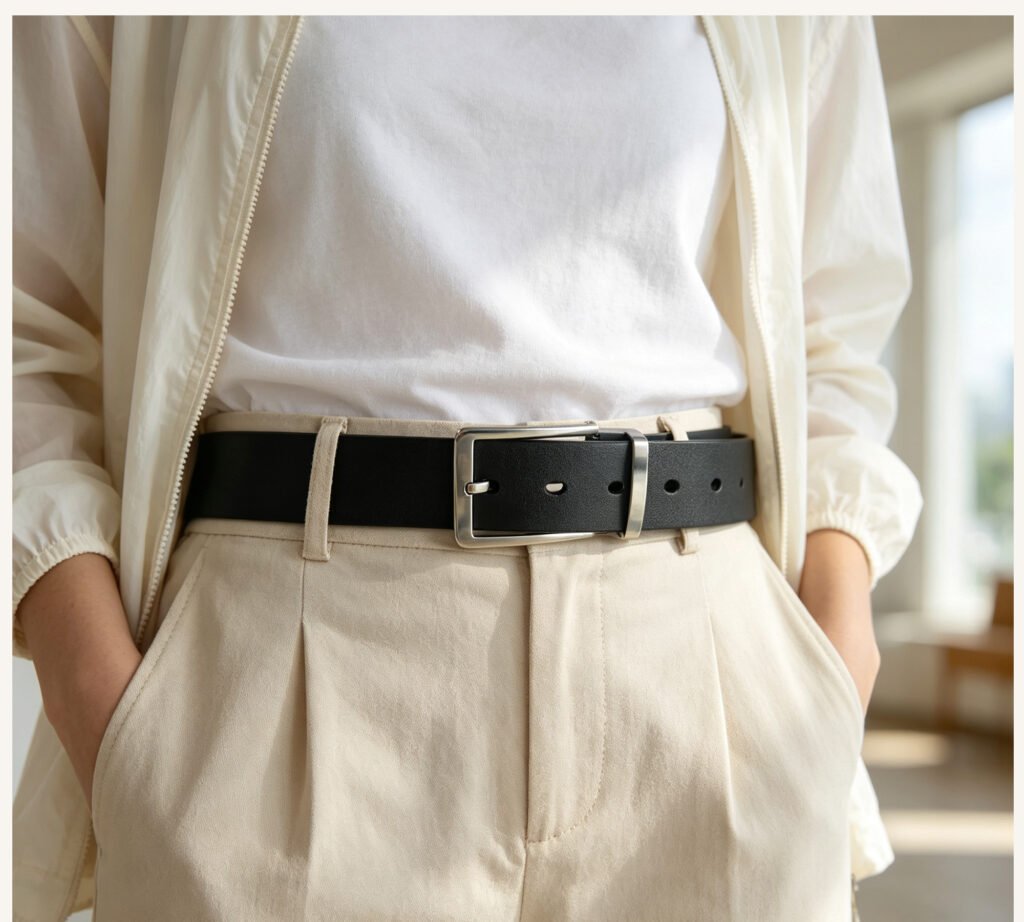
We make belts. Three of them, in the Everest Series.
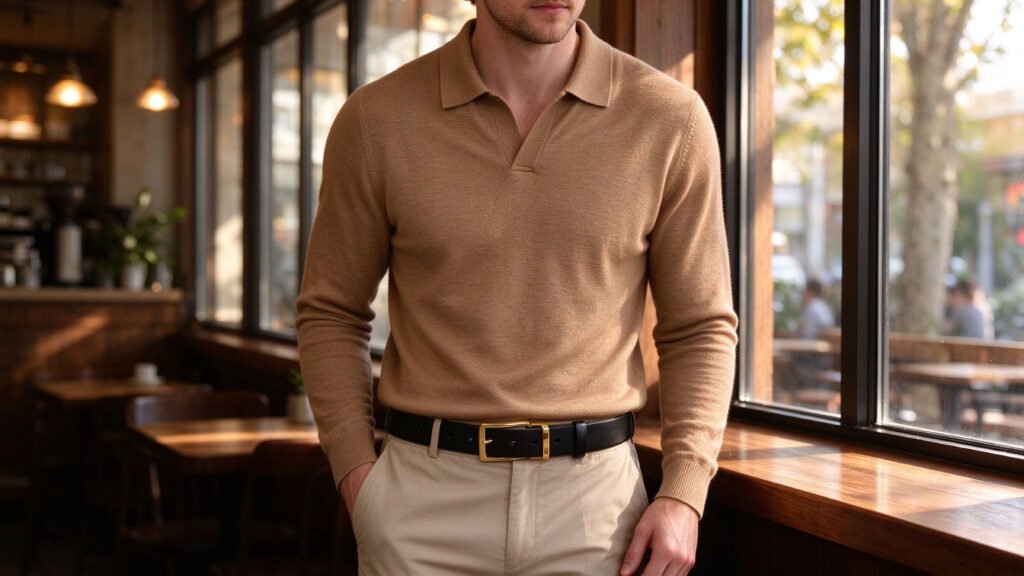
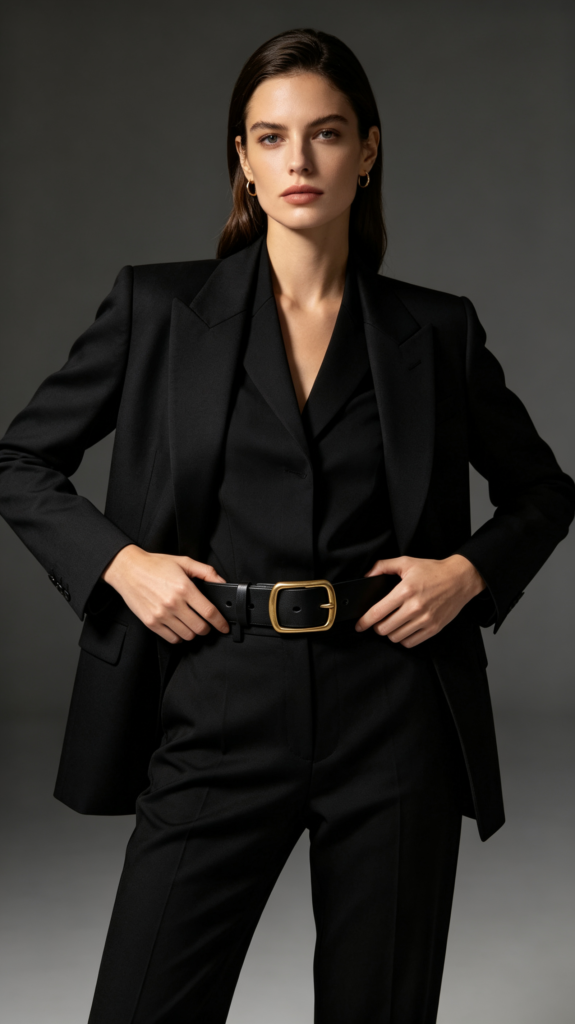
The Glacier pairs a silver-tone 304 stainless buckle with midnight-black full-grain leather. The Gold carries a mirror-finish buckle and leaves the studio in a gift box. The Saddle sets a solid copper buckle against vegetable-tanned leather, which darkens with wear instead of staying still.
Each is 399 US dollars. Each is a belt, and nothing else. We have been asked to add wallets, bags and small leather goods. We will not, while three belts still have room to improve.
The Material
Full-grain leather is the outermost layer of the hide, with the grain intact. It is what remains when nothing has been sanded away to hide a scar or a flaw. Corrected leather is smoother at the counter and weaker in the hand. We buy full-grain.
Each strap is cut from a single piece of leather. No splicing, no stitched join along the body. A join is the first place a belt fails, so we remove the join rather than reinforce it.
The edges are burnished by hand, in layers, until the fibre closes and stops taking dye. It is slow work and it is the difference between an edge that survives a year and an edge that survives a decade.
Hardware is 304 stainless steel or solid copper. Not plated zinc. Plating wears through at the buckle tongue first, and then the buckle looks older than the leather it holds.
You can check the claim yourself in under a minute. Look at the edge of the strap where it is cut. Full-grain shows a tight, dense fibre that fades into the surface layer without a seam. Corrected leather shows a thin skin sitting on top of a looser core, and the two separate with wear. Then bend the strap. Full-grain creases in fine lines and recovers. Corrected leather creases deeply and stays creased.
The strap is 3.5 cm wide, which passes through the loops of suit trousers and jeans alike. We chose that width deliberately. Wider reads casual and will not enter a dress trouser loop. Narrower reads formal and looks thin against denim. One width, worn with everything, is more useful than two widths worn half as often.
The Number
Every belt carries a serial number, in the format EVB-Glacier01, EVB-Gold01, EVB-Saddle01. The number is recorded against the batch, and it stays verifiable for life.
We issue 100 pieces per model, per season. When the hundredth number is gone, the model closes. No restock. No reissue. The next season begins with a new number series.
This is a manufacturing constraint before it is a marketing decision. Hand burnishing and piece-by-piece inspection do not scale past a hundred without turning into a factory line, and a factory line produces a different object.
If a strap ever fails on a point we are responsible for, it is repaired or replaced and the number is carried across. The record follows the number, not the physical strap. A customer who has owned the belt for six years should not lose their place in the series because a buckle wore out.
The Price

399 dollars is a considered number, and it is worth showing the arithmetic.
A full-grain hide large enough for a single-piece strap costs several times a corrected hide. Solid copper and 304 stainless are priced by weight, not by appearance. Hand burnishing cannot be automated without visible loss. Each belt is checked individually before it is boxed, and the box itself is not free.
What is not in the number is a discount budget. Most seasonal brands price at a level that leaves room for a 30 percent markdown in January. We price once, at the level the object costs to make and to stand behind, and we hold it.
A belt discounted at the end of a season was overpriced at the beginning. We would rather be clear at launch than generous at clearance.
Spread over five years of daily wear, 399 dollars works out to about twenty-two cents a day. That is the comparison we would rather invite than a markdown. A ninety-dollar belt replaced every eighteen months costs the same or more, and it never develops the surface that full-grain leather develops after a year of contact with a body.
What We Refuse
We refuse the end-of-season sale. Not as a matter of taste, but because a permanent discount schedule teaches a customer to wait, and waiting is not the behaviour we want to reward.
We refuse invented reviews. If a page shows no reviews, it is because no customer has written one yet. We will not fill the space with composite strangers or borrowed praise. Regulators in several markets now treat that as fraud, and they are right to.
We refuse borrowed heritage. We have no 1890 atelier, no founding family in Florence, no royal warrant. What we have is a supply chain we can name and a batch record we can show.
We refuse urgency theatre. No countdown timers, no “three people are looking at this”, no manufactured scarcity. The scarcity here is real: a hundred numbers, then done.
How to Check
Every batch is recorded and archived. If you want to know what leather a season used, the record exists and we will answer.
Serial numbers are verifiable for life. Write to us with the number and we will confirm the model, the season and the batch.
We service the strap for as long as you own it. Burnishing can be refreshed, edges re-sealed, hardware replaced. Send it back and we will tell you what it needs before we charge you for anything.
Thirty days for quality issues, with return shipping covered. Free global shipping on every order. Both apply wherever our checkout accepts an order.
The address on the contact page is a real building in Wuhan, and the mailbox is read by a person.
Care is simple and we would rather say it plainly. Wipe with a dry cloth, never with alcohol or solvent. Condition twice a year with a neutral leather cream, less in humid weather. Let it dry away from direct heat if it gets wet, and do not store it folded. A belt hung or rolled keeps its shape; a belt folded on a shelf keeps the fold.
The Next Release
When a season closes, the number series closes with it. The next series is announced to the release list before it reaches the shop.
The list receives release notices and care notes. It does not receive promotions, because there are none to send.
If the object described on this page is the object you want, the Glacier, the Gold and the Saddle are in the shop now, each with its own number waiting.